
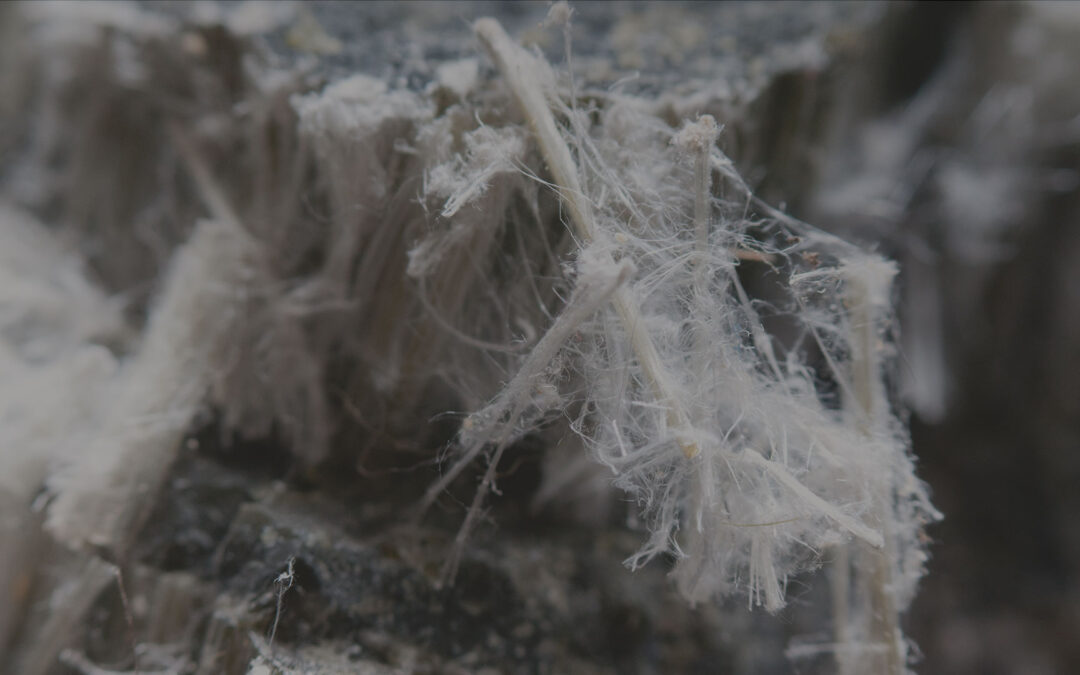
The term ‘asbestos’ is generally used as a blanket name to refer to the types of mineral which were used within building materials and was completely banned by the UK Government in 1999. There are numerous types of asbestos which were routinely used in different building materials, such as insulation, insulating board materials, reinforced cement products and so on. These products are now referred to as Asbestos-Containing Materials (ACMs).
In this article, we take a closer look at the three main types of asbestos: chrysotile, amosite and crocidolite which were most prevalent across the building industry and their individual properties. Carry on reading to learn more!
Two Mineral Families of Asbestos
There are two mineral families where asbestos can be found, known as serpentine asbestos and amphibole asbestos:
-
- Serpentine asbestos fibres are characterised by their length and curly shape. Chrysotile (white asbestos) is part of this mineral family – the fibres are softer, more flexible and are considered to be less hazardous than amphibole asbestos fibres. This is the most commonly used type across commercial industries.
- Amphibole asbestos fibres are much more brittle and are often needle-like in appearance, and are much more hazardous than serpentine asbestos. There are many types of asbestos in this family, including amosite (brown asbestos), crocidolite (blue asbestos), tremolite, actinolite and anthophyllite.
Three Commonly Found Types of Asbestos:
Though there are six noted types of asbestos, tremolite, actinolite and anthophyllite are not generally considered to be the most commercially available types. Instead, chrysotile, amosite and crocidolite were frequently used within building materials due to their durability, conductivity and fire-retardant qualities.
Chrysotile (White Asbestos)
Chrysotile was the most widely used type of asbestos, especially from a commercial building point of view. While most chrysotile products fall into the non-licensed works category, it is very important to note that chrysotile is still classed as a carcinogenic material and should be treated with extreme caution. Exposure to white asbestos fibres can still lead to the development of life-threatening illnesses, so its risks must not be understated.
Chrysotile Asbestos-Containing Materials Include:
-
- Adhesives and sealants
- Brake pads
- Gaskets
- Cement
- Insulation
- Roofing products
- Vinyl tiles
- Textiles
Amosite (Brown Asbestos)
Banned in the UK in 1985, amosite is an amphibole asbestos, meaning that it is considered to be a higher-risk mineral. It has a crystalline structure, which makes it more likely to be inhaled if disturbed. Though in mineral form amosite appears to be brown, it can also vary in shades to a pale grey or green depending on how it is used in products.
Amosite Asbestos-Containing Materials Include:
-
- Insulation (pipework, tanks and calorifier)
- Fire protection (sprayed coatings)
- Ceiling tiles (insulating boards)
Crocidolite (Blue Asbestos)
Also part of the amphibole asbestos family, blue asbestos experienced a voluntary industry ban in 1970, and then a final government ban in 1985 due to the dangers associated with the fibres if disturbed and inhaled. In particular, crocidolite fibres are very thin which can make it easier for them to be lodged in lung tissue. Similar to amosite, crocidolite must be treated with extreme caution, and sometimes cannot be identified simply by its colour as it can appear as blue, grey-blue or green-blue when mixed within a product.
Crocidolite Asbestos-Containing Materials Include:
-
- Insulation
- Fire protection
- Spray-on insulation
- Thermal insulation
Are You in Need of Asbestos Remediation or Removal?
Asbestos, in all its forms, should always be exercised with the utmost caution. If you think you have asbestos present within your commercial or residential building, get in touch with our asbestos experts today and we can provide you with advice and a free quote should you decide to take action.
